Native means native.
Chic for you. Lunch for them.
Every outdoor plant here carries one of three labels, or none. Here's what each means, and what to plant in your state.
Pick your state, or set your ZIP anywhere on the site, to see what grows wild there.
Three labels and a blank. One line each.
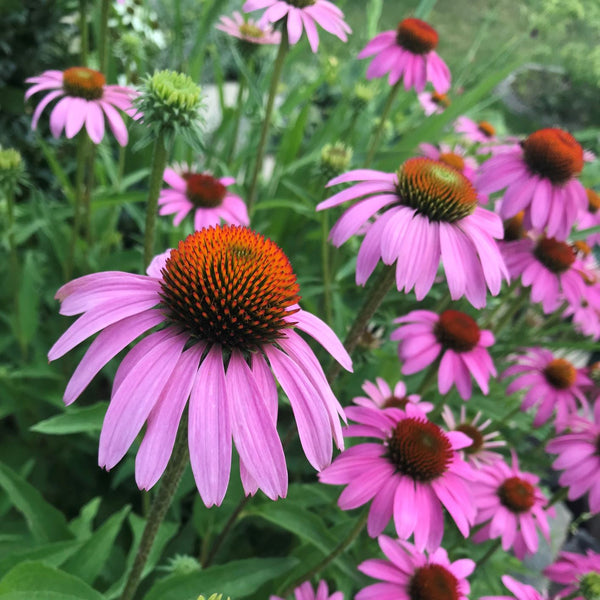
The plant as it grows wild.
A North American species, straight, or a seed strain of it. No breeder, no cross, no "improved". Purple coneflower is the purple coneflower the goldfinches have always known.

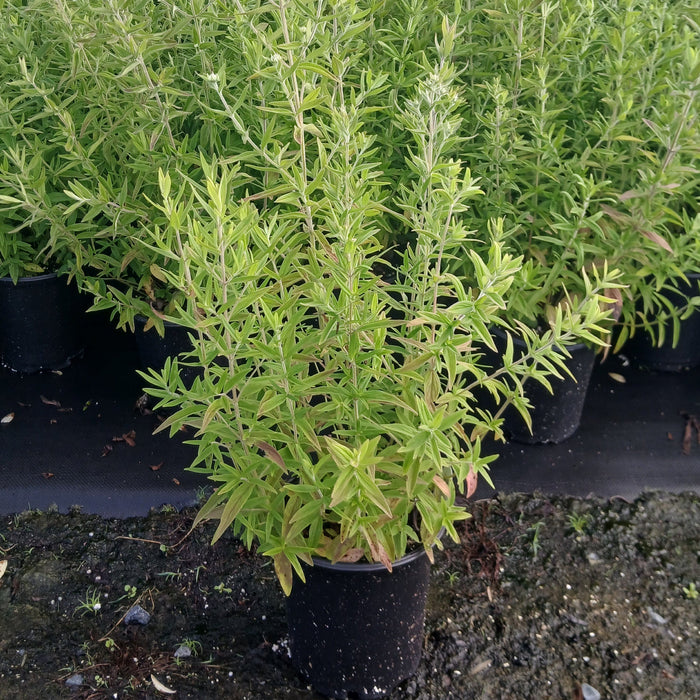
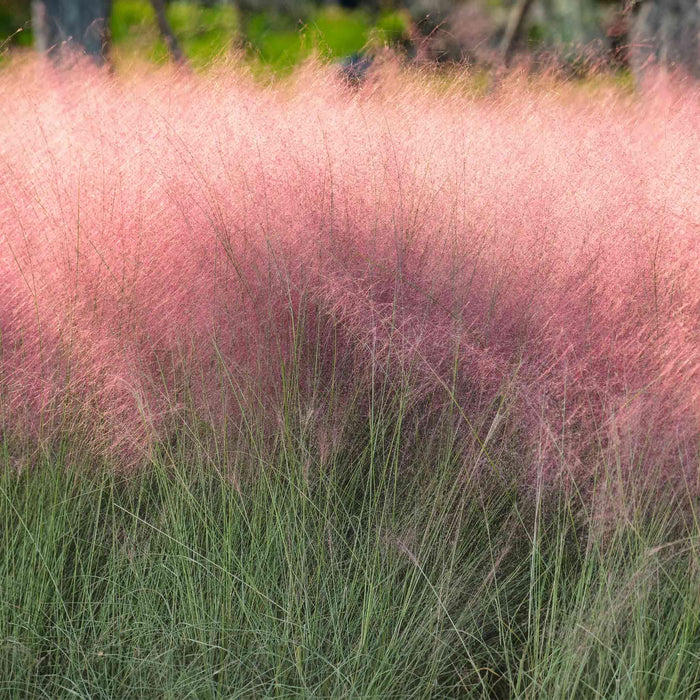
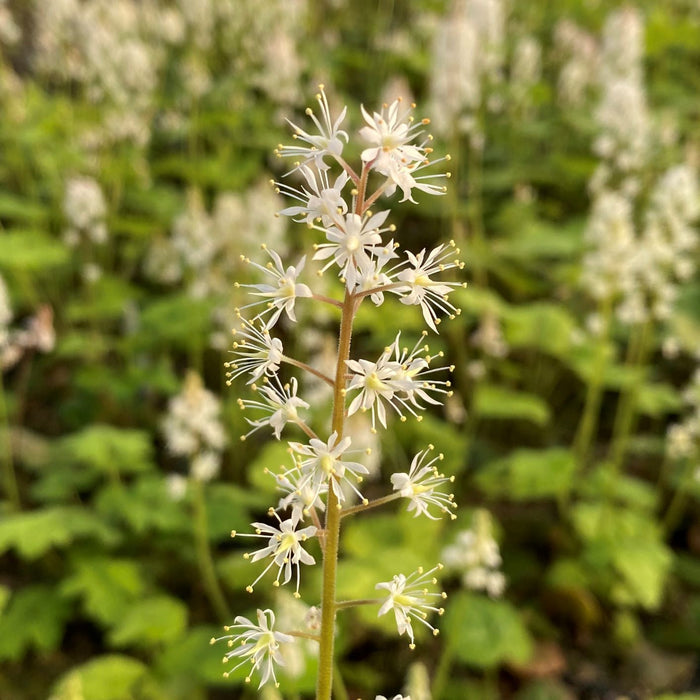
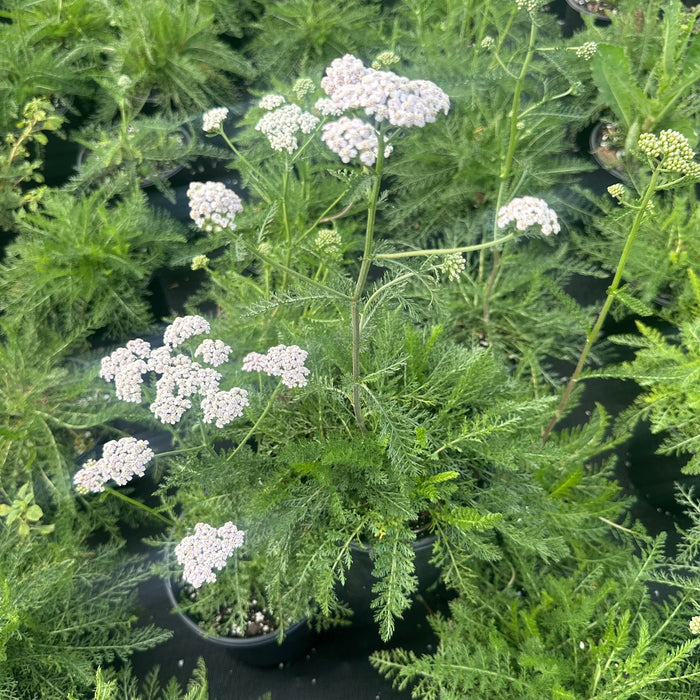
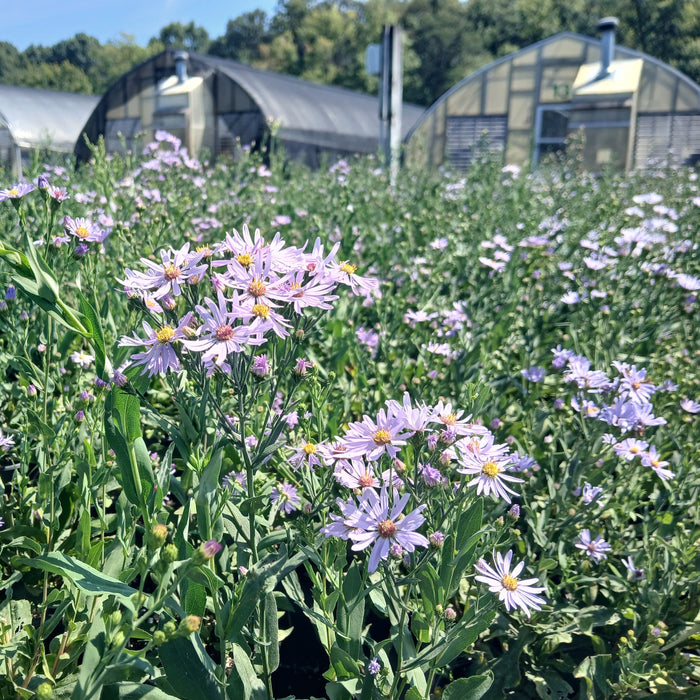
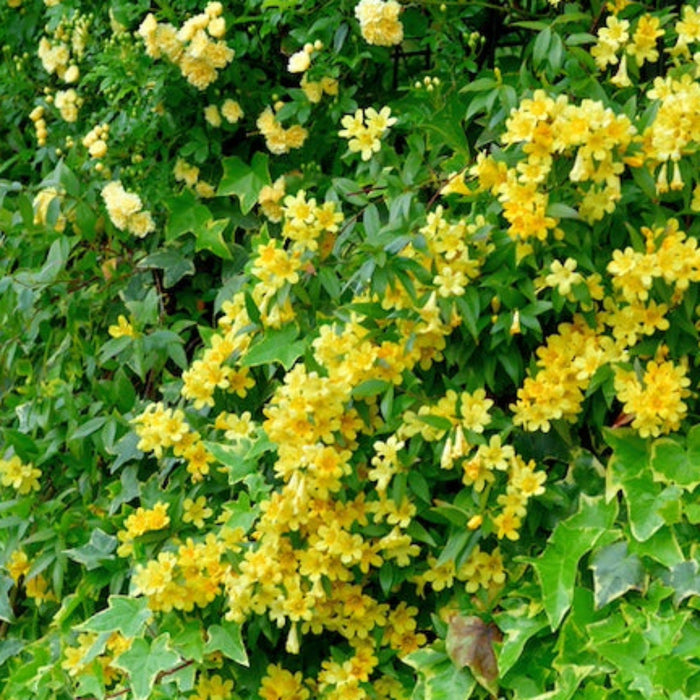
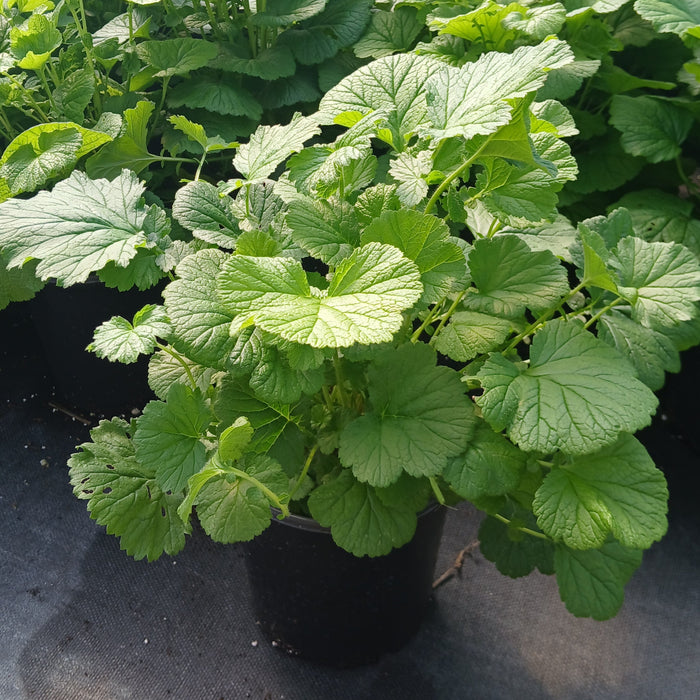
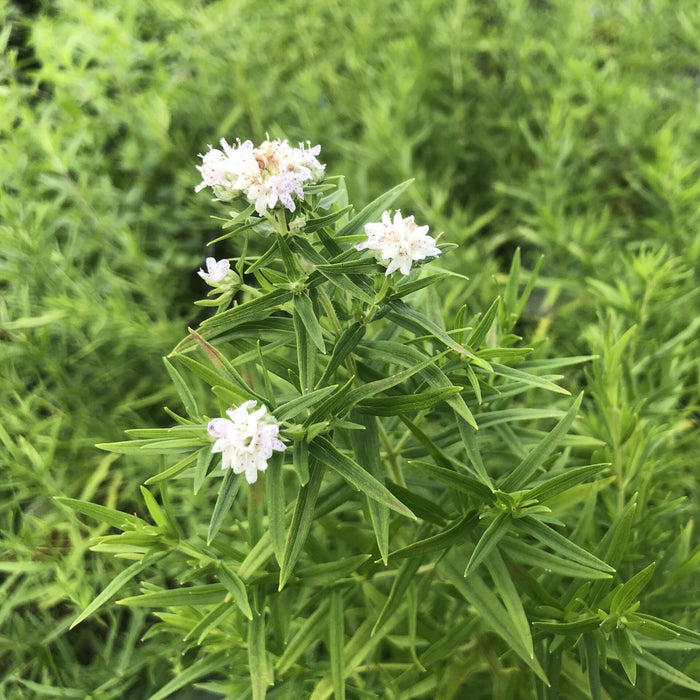
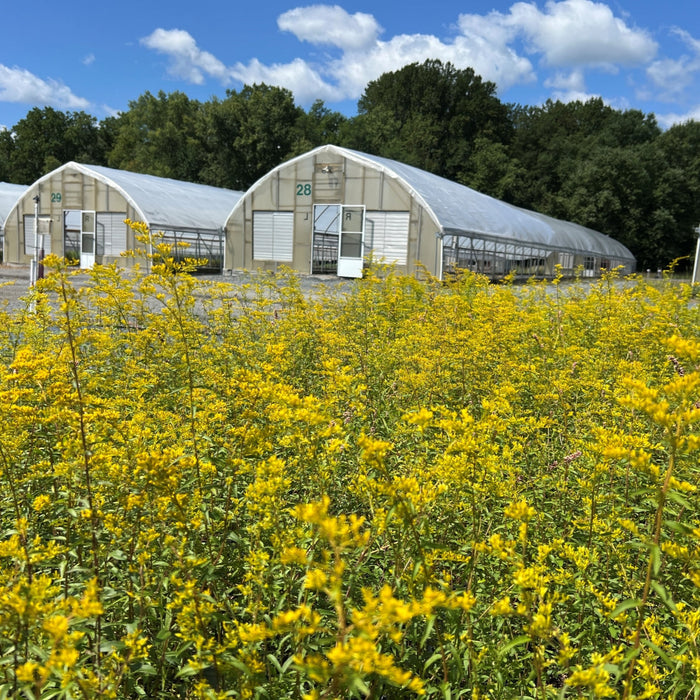
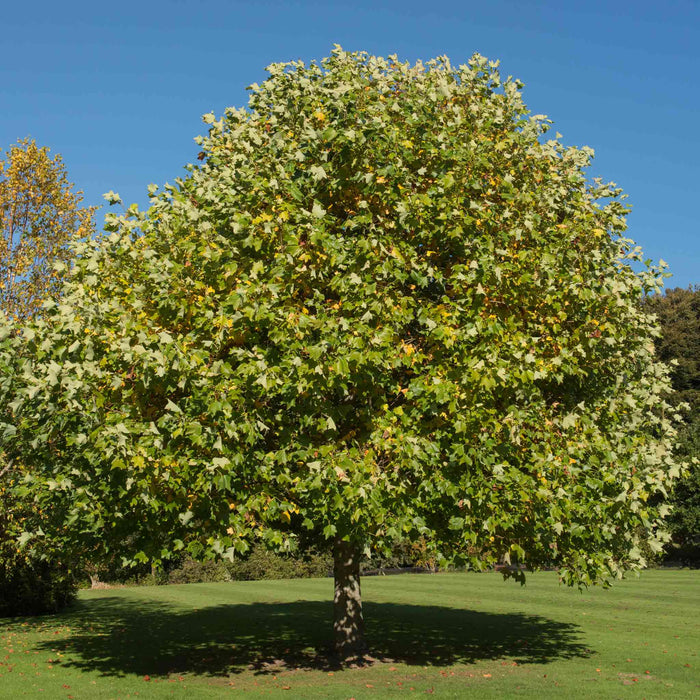
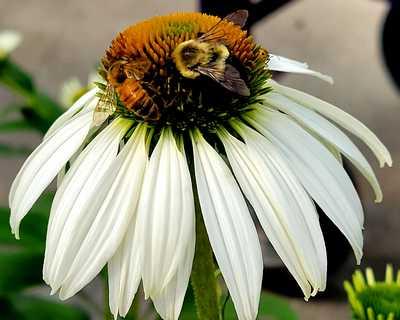
A native, with a name tag.
A named selection of a native, or a cross where every parent is native, with single, open flowers. 'White Swan' is a purple coneflower that came out white. Still a coneflower. Still lunch.
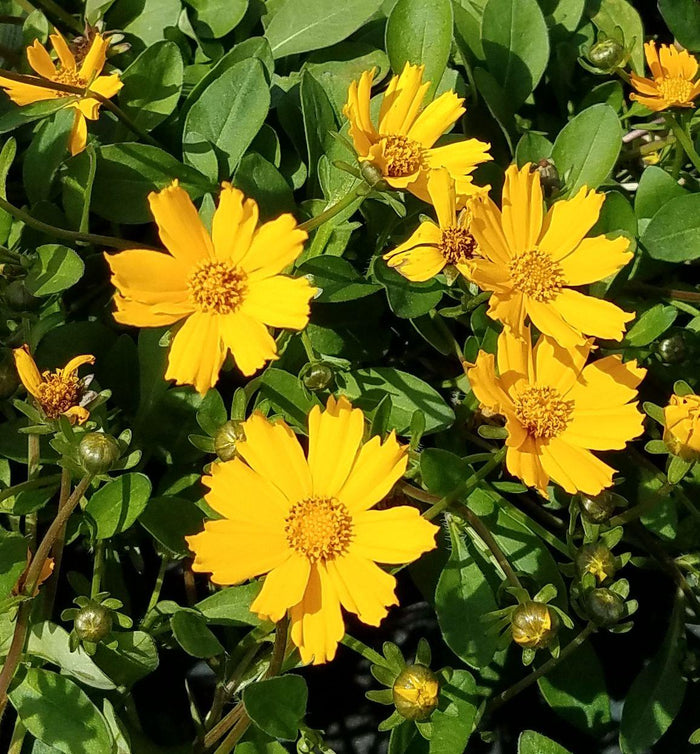
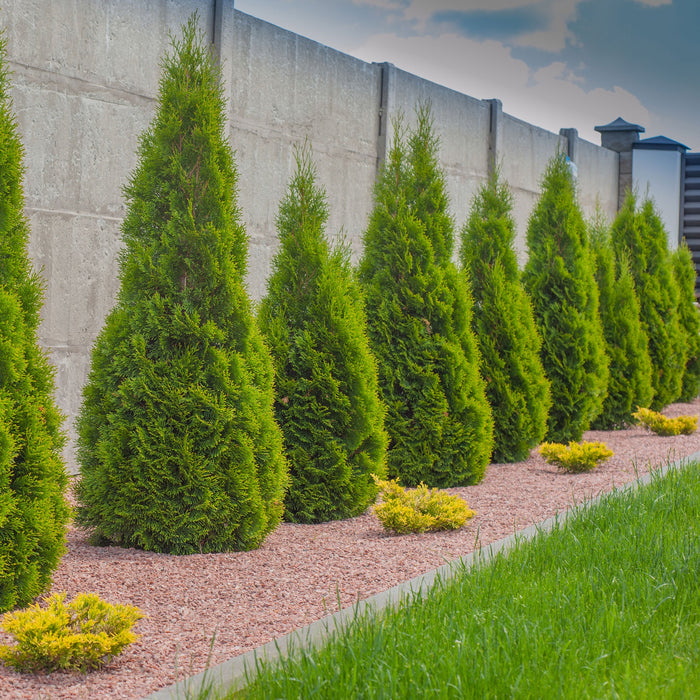
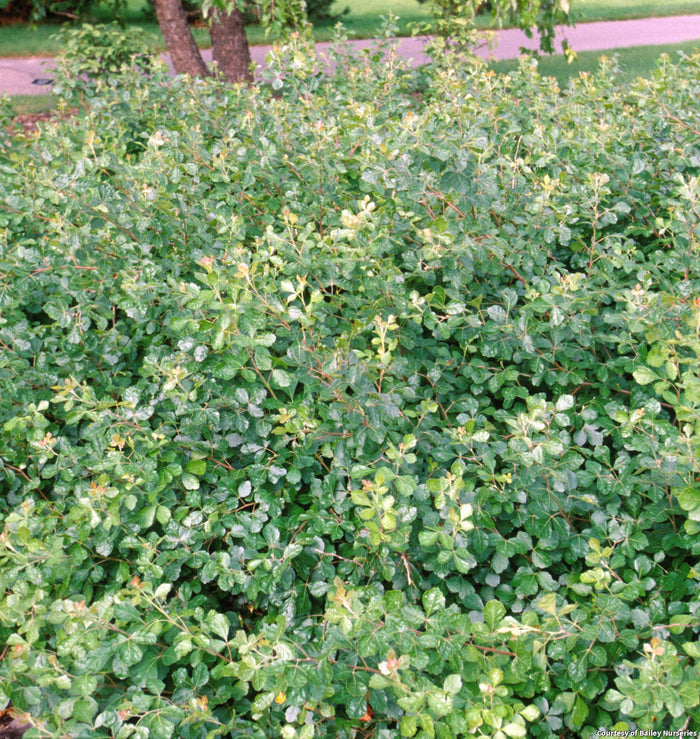
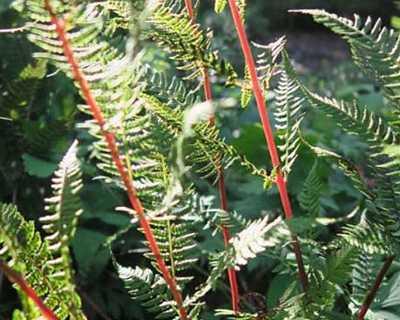
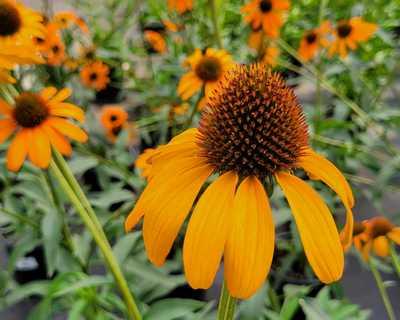
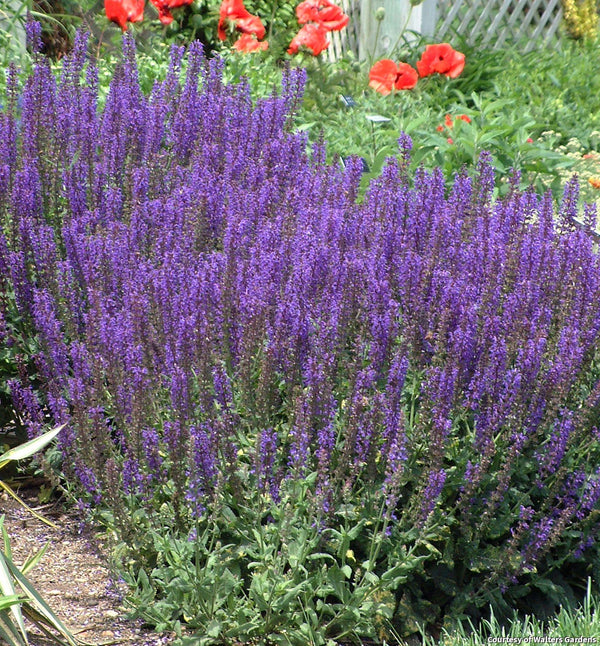
Not from here. Still feeds them.
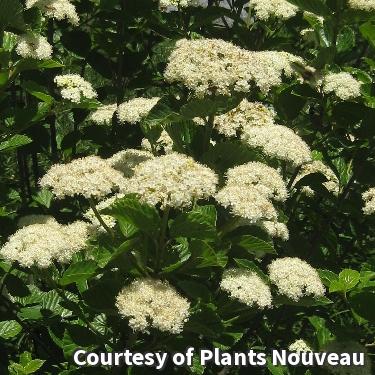
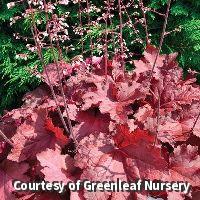
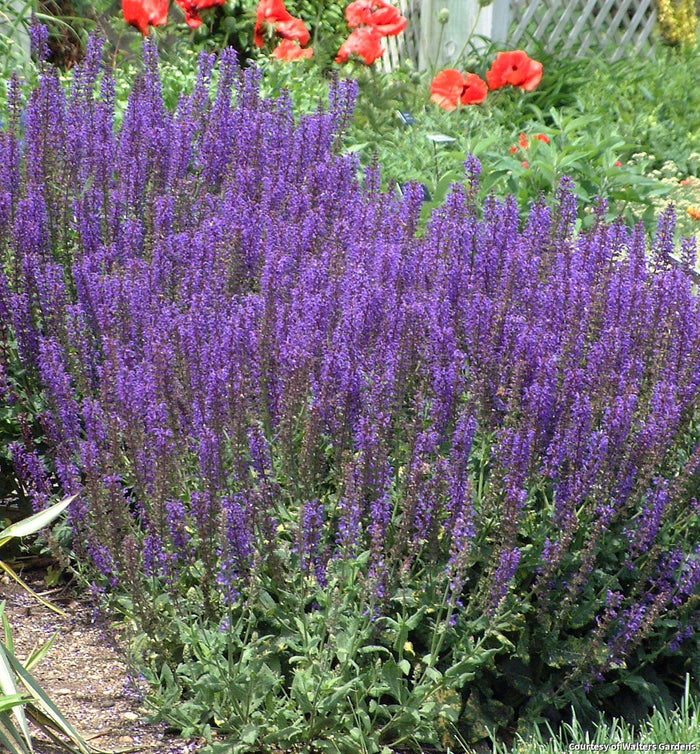
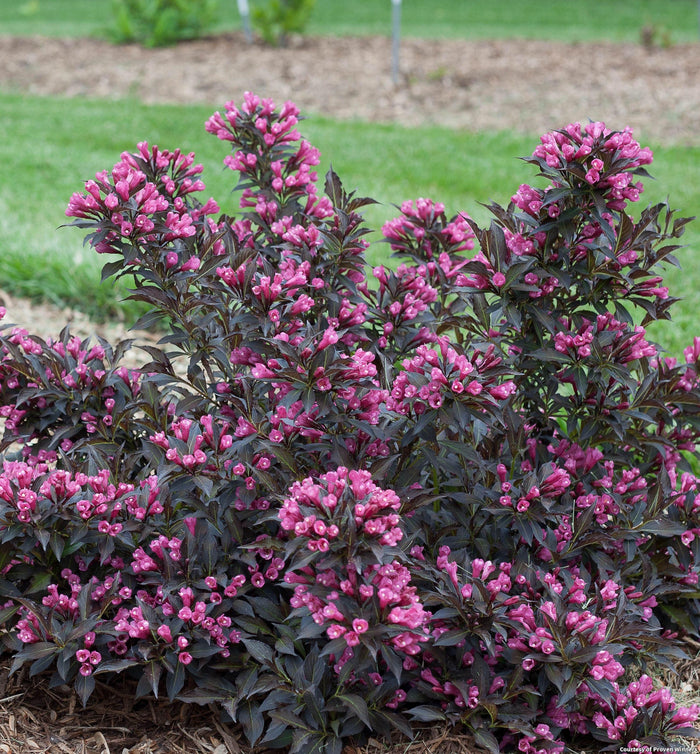
Not native, but the flowers are open and the bees use them. May Night salvia, Wine & Roses weigela, lavender: good plants with an honest label. We don't call them native, and we don't call them lesser.
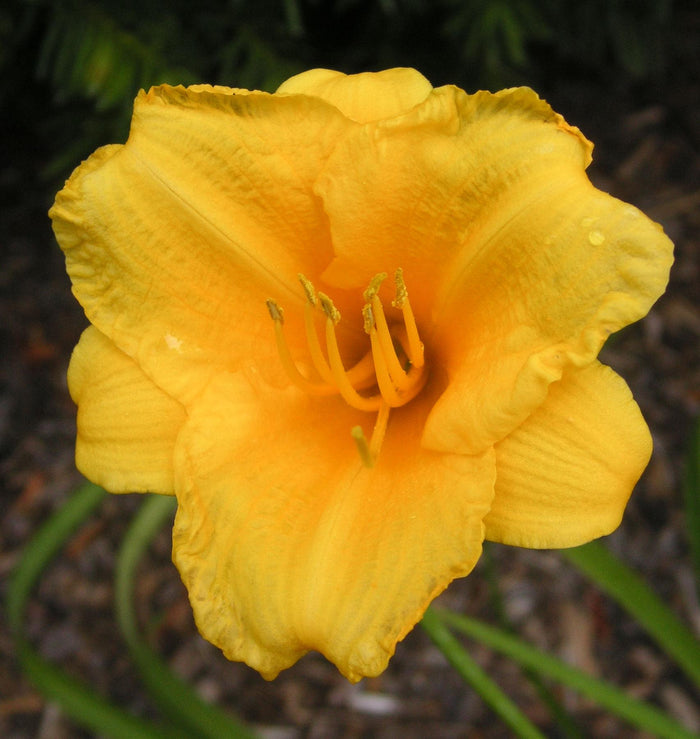
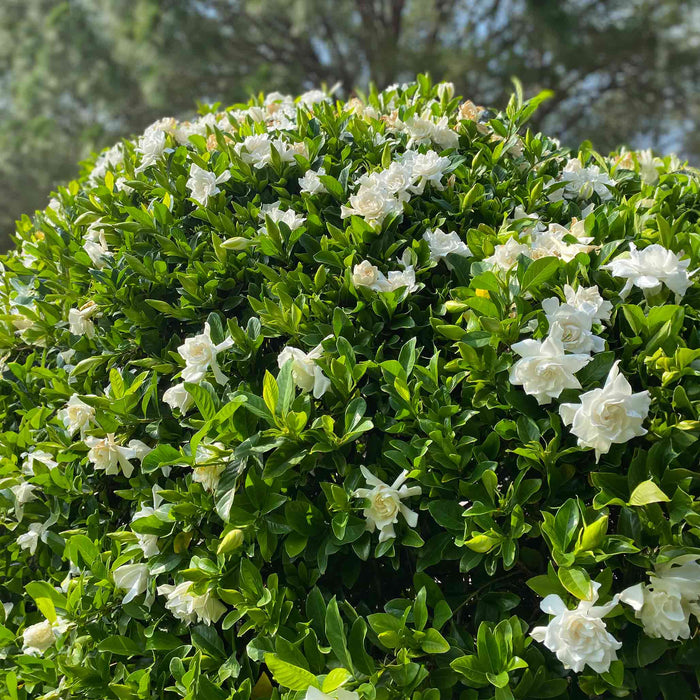

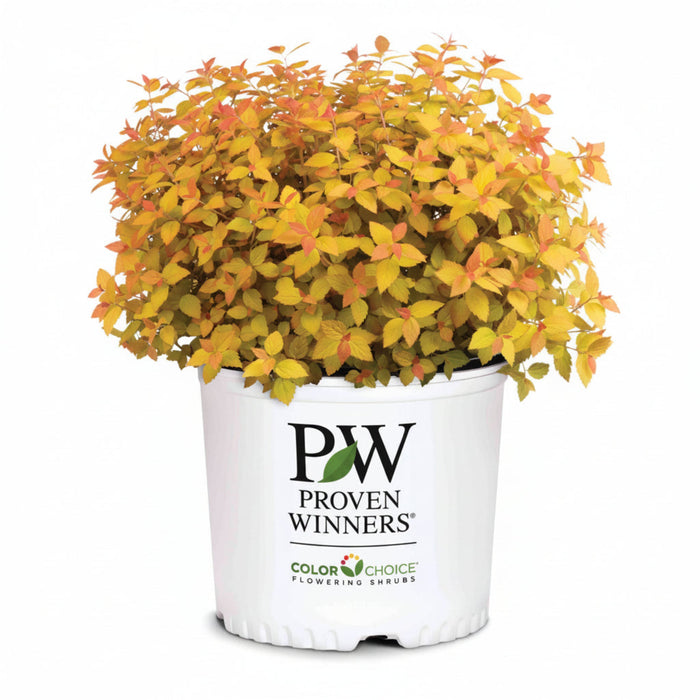
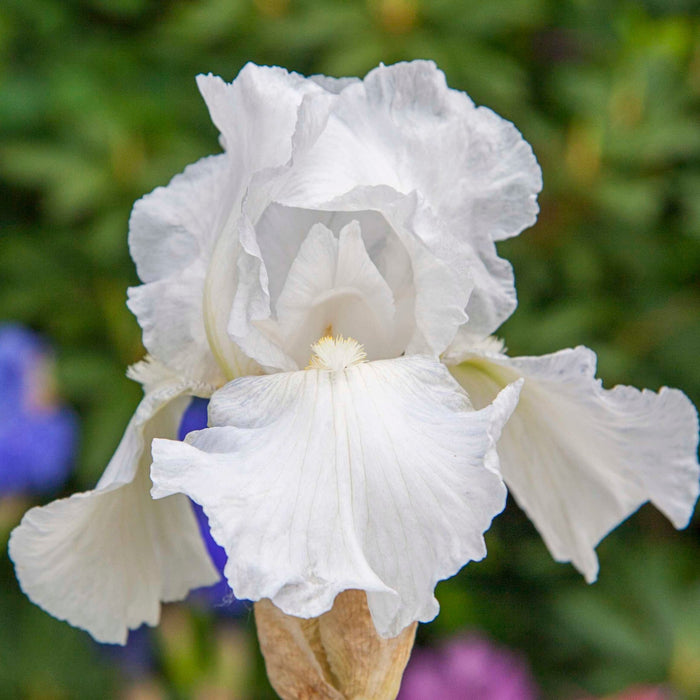
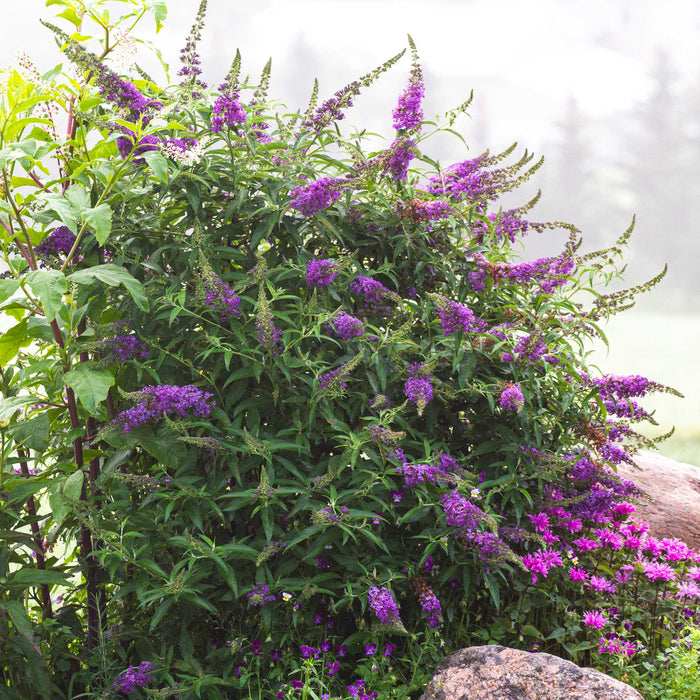
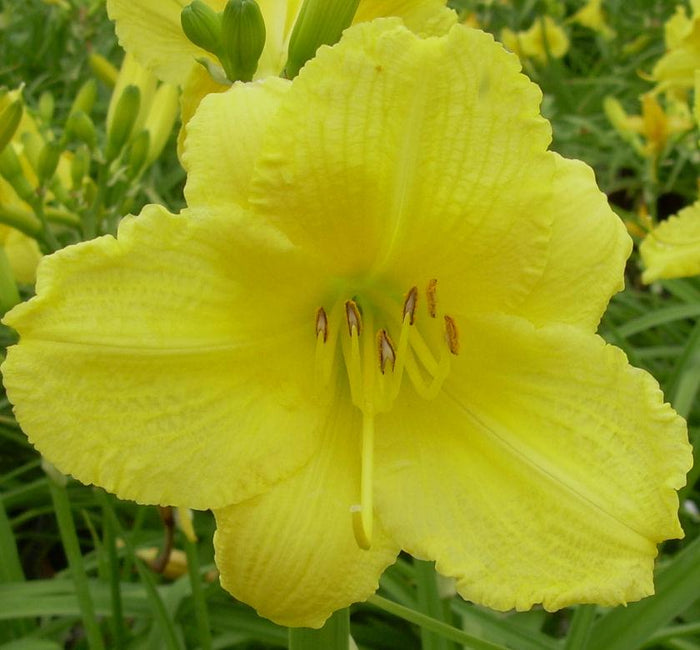
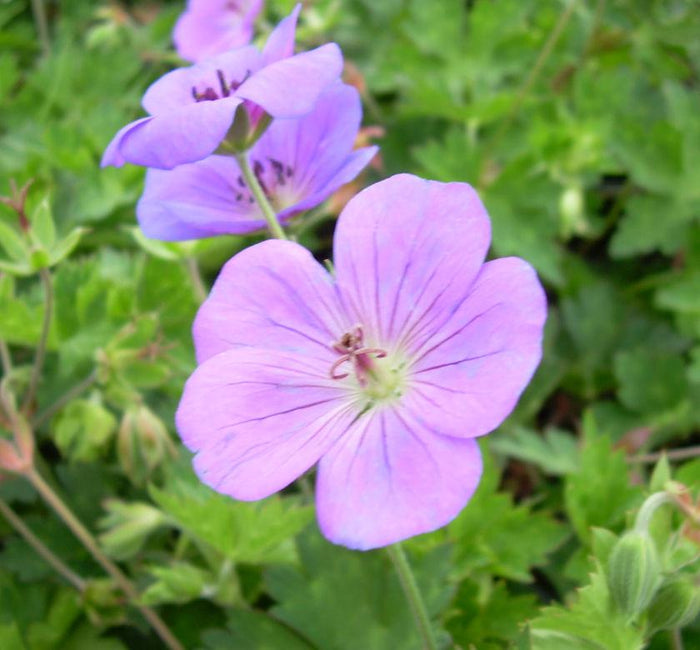
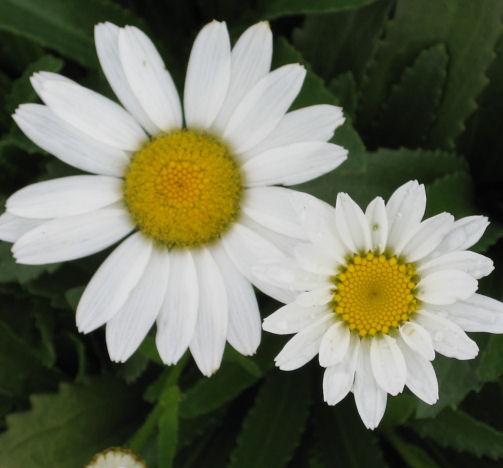
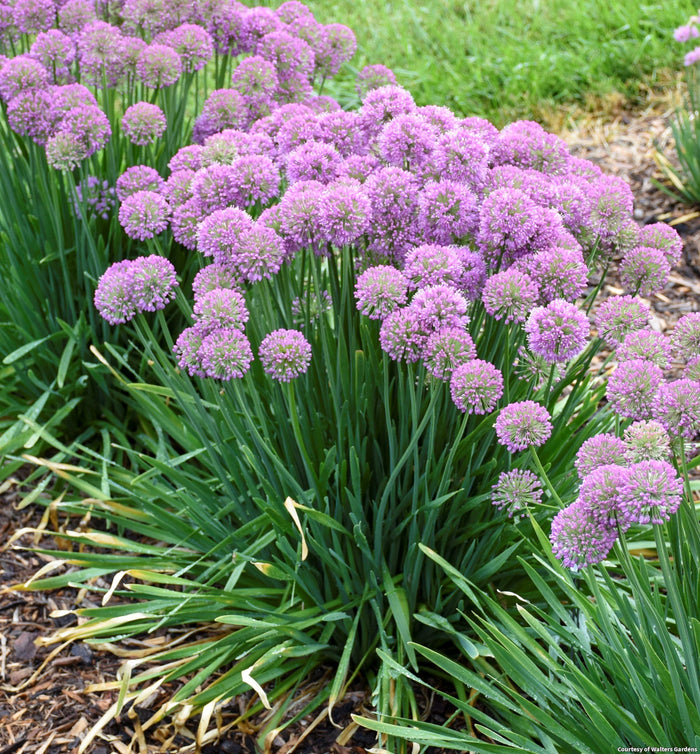
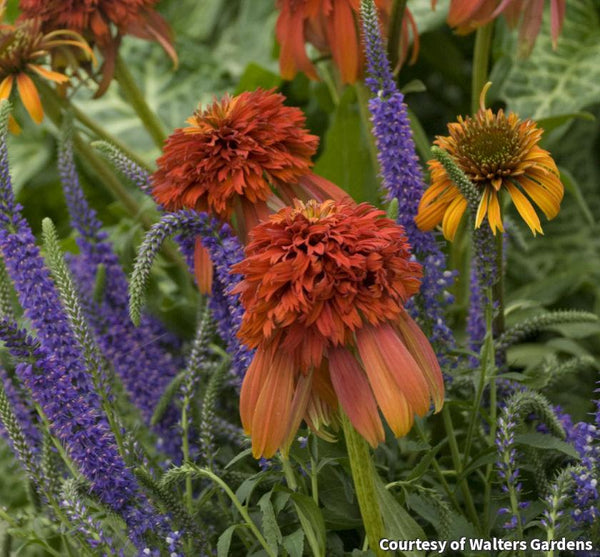
Extra petals where the pollen was.
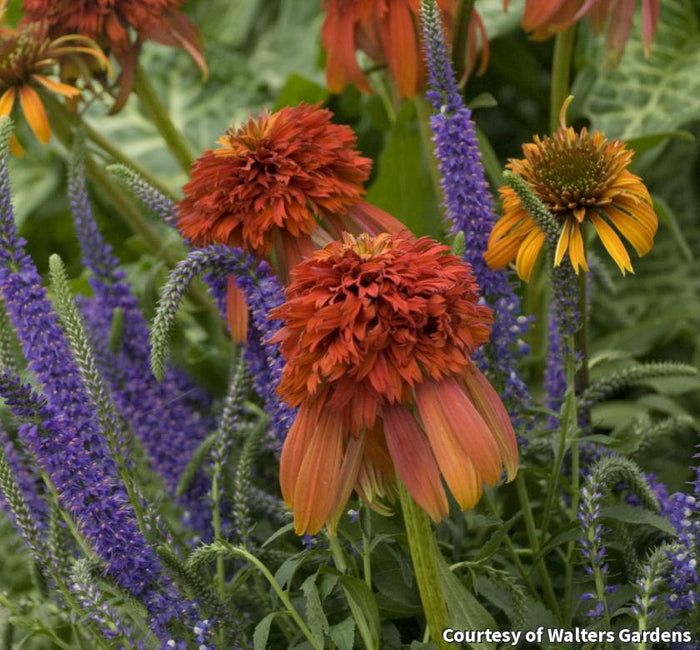
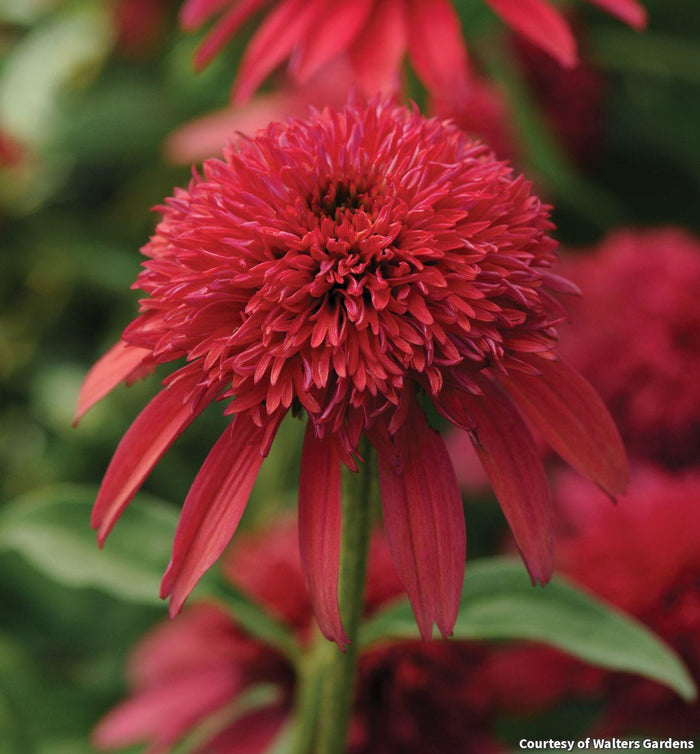
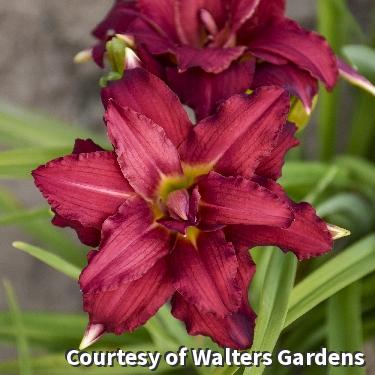
Doubles get no label, whatever their parents were, and neither does anything we can't vouch for. 'Hot Papaya' is bred from native coneflowers, and the bees can't get in. We won't pretend otherwise, and we won't stop you.
Gorgeous. Bees shrug. Buy it anyway.
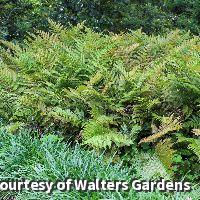
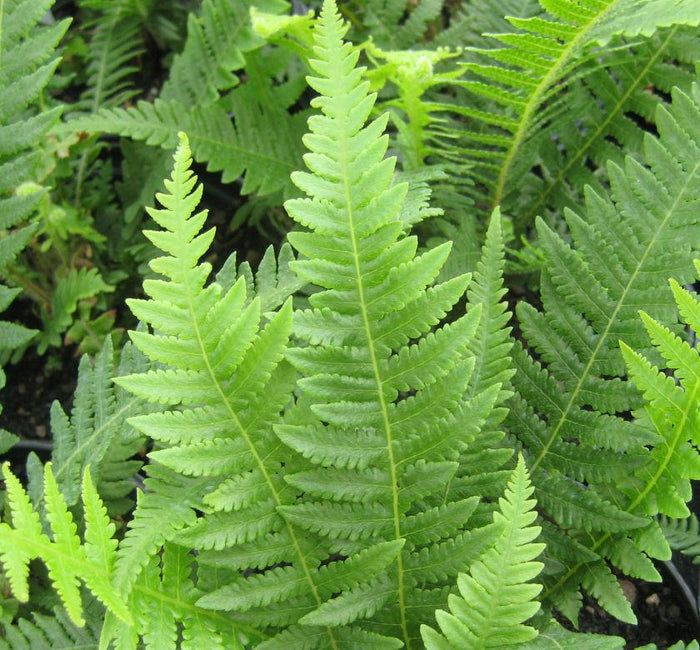
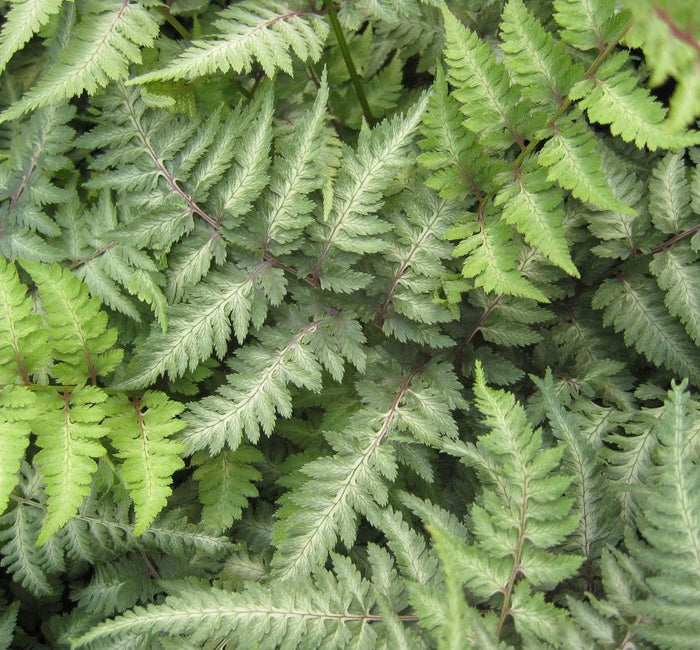
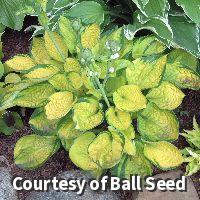
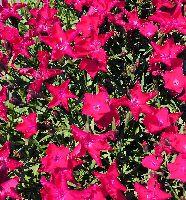
North America is a big tent.
So every native's plant page also says where the species grows wild, state by state, from USDA range records. When it grows wild in your state, the pill says so by name. That is the difference between these two:
Take Ohio: 27 of our perennials grow wild there, against 92 that count as native somewhere on the continent. Shorter list, better bed.
We only count what's been counted.
Where the research exists, the plant page says what the plant actually supports, and who counted. Where it doesn't, the page says nothing. Three from the catalog:
Where we had to pick a side.
Most plants sort themselves. These didn't, so here's the call we made and why. If you know better, the address is at the bottom.
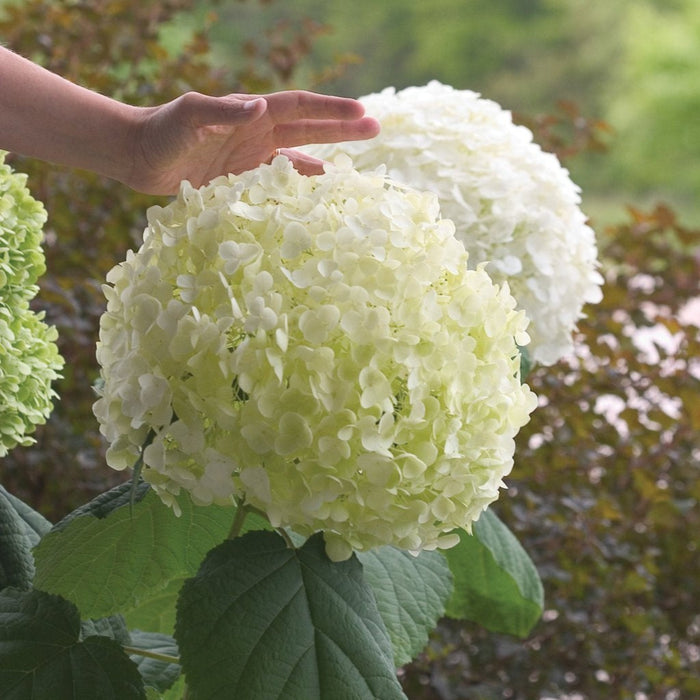
Annabelle and Incrediball hydrangea
Their mophead florets are mostly sterile, which argues for no label. The leaves still host the native insects a smooth hydrangea always has. Kept as native variety.
Grey Owl juniper
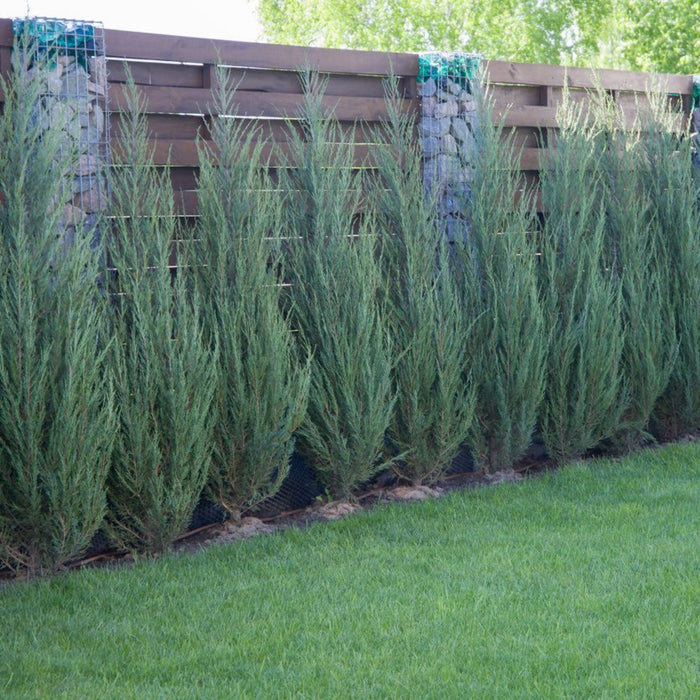
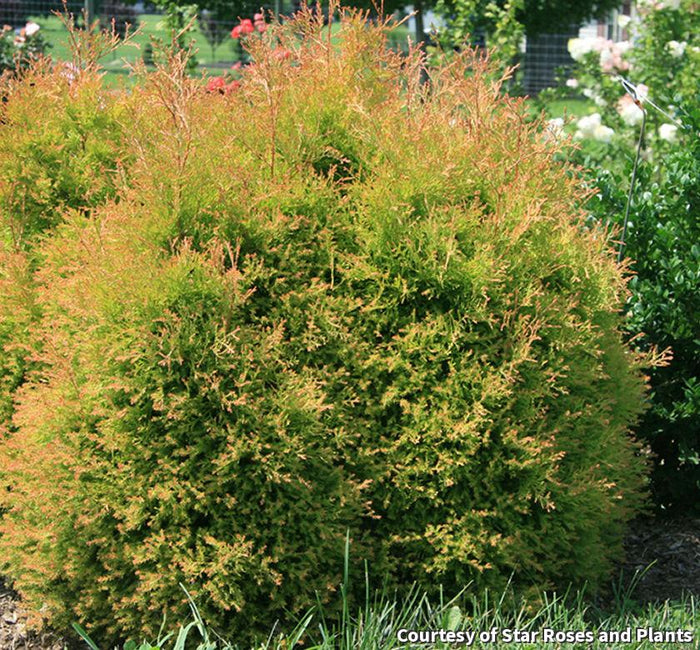
Sold as a selection of eastern red cedar, but it's probably a cross with Chinese juniper. We can't vouch for the parentage, so it gets no label.
Fried Egg coneflower
Looks like a double at a glance. The breeder describes single white petals around a yellow center, so the pollen is reachable. It keeps its label: native variety.
Native kits.
Every plant in these is native or a native variety. Set your state and we sort them by what grows wild there.
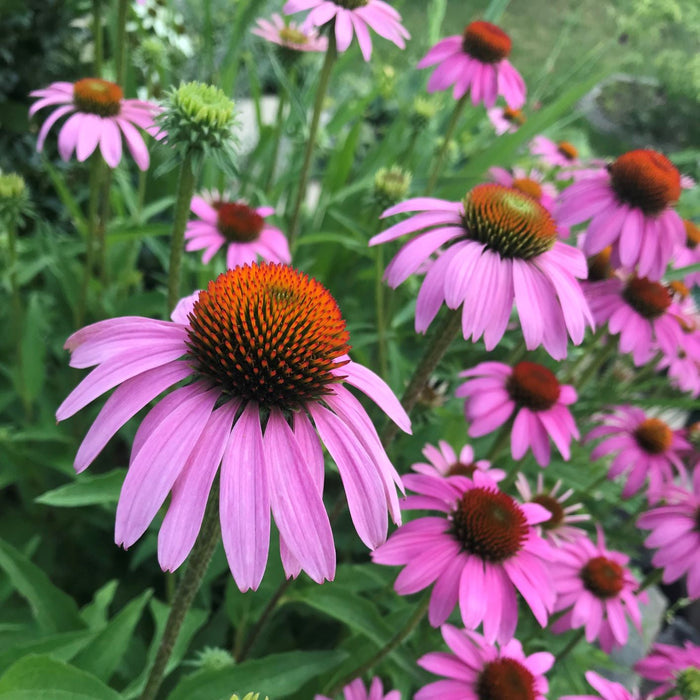 Pollinator garden kit
The Bee BorderOpen for business from June to frost.Prairie cloverConeflowerMountain mintTickseedAster
All 5 native or native variety
9 plants · $181.914 × 8 ft bed
See the kit →
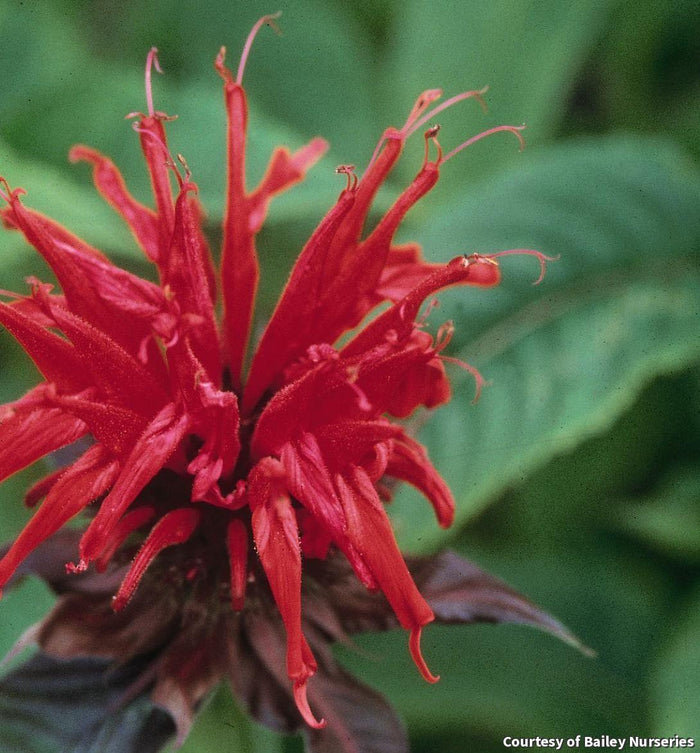 Pollinator garden kit
The Pollinator BuffetOpen seating for bees, butterflies and hummingbirds.Bee balmConeflowerGoldenrodMouse-ear tickseedTickseed
All 5 native or native variety
14 plants · $424.864 × 8 ft bed
See the kit →
 Rain garden kit
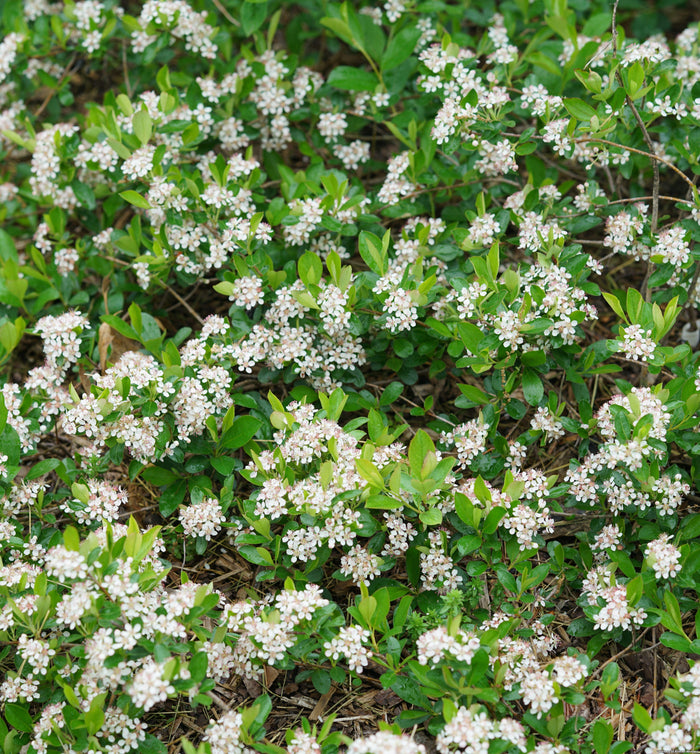
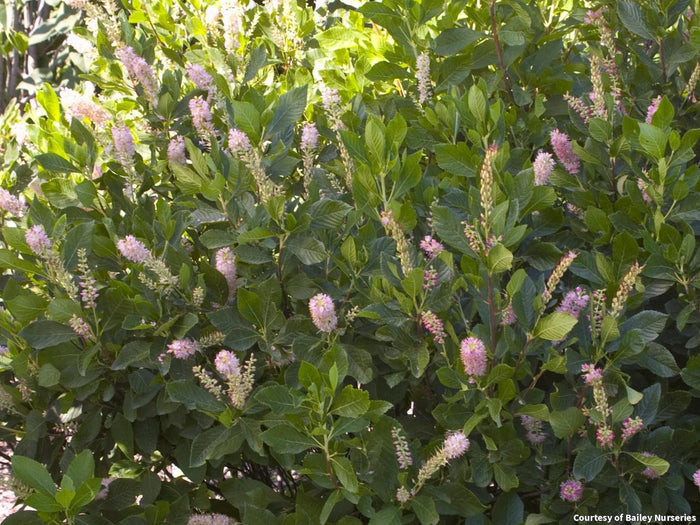
The Rain GardenTurns the soggy spot into the best spot.SummersweetHibiscusBlue flag irisTurtleheadChokeberry
All 5 native or native variety
11 plants · $519.894 × 8 ft low spot
See the kit →
Plants marked green grow wild in your state. When one is out of stock, the kit swaps in its listed alternate, the same way the kit pages do.
Tell us. We'll check the records, fix the label, and say so.
Write to hello@thefineplant.co with the plant's name.
Where our labels come from: USDA PLANTS state range records for native status; breeder descriptions for flower form; Narango, Tallamy & Shropshire 2020 (Nature Communications) for caterpillar hosts; Fowler & Droege 2020 for specialist bees; state extension and DNR lists for hummingbird plants. Growers supply the rest, and when we don't know who grew a plant, the page doesn't claim to.
Native plant picks for your state,
in the Sunday Tip.
Zip in, and when the tip is about bees you'll see a kit, and how much of it grows wild in your state. Same labels, same rules.