Light
Full sun. It takes light shade but gets leggy.
Monarda punctata
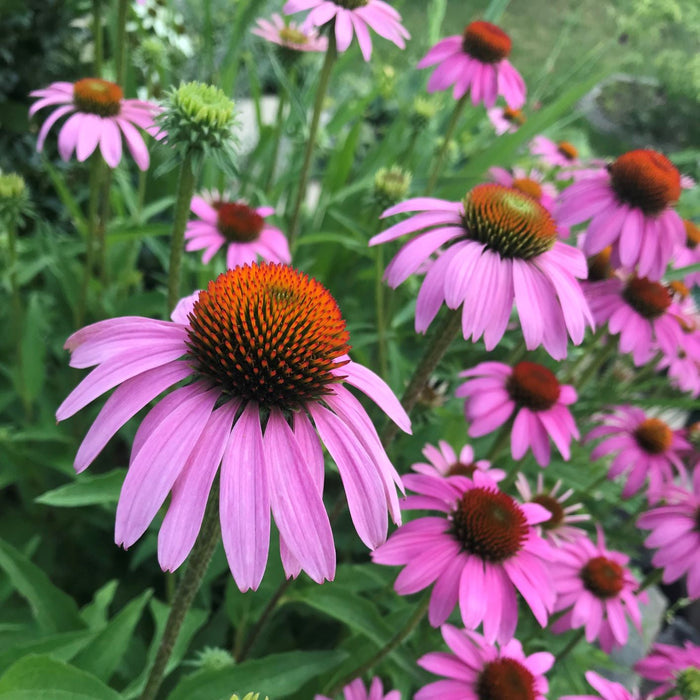
Odd-looking flowers. Every bee in town.

Full sun. It takes light shade but gets leggy.
Water weekly the first summer. After that, only in a long dry spell; it prefers dry to soggy.
Plant in spring or fall in lean, well-drained soil. Sand and gravel are fine. Skip the compost.
None. Rich soil makes it floppy.
Leave some seed heads standing so it reseeds. Cut the old stems down in early spring.
Leaves in spring, bloom from July into September, seed heads through winter. New seedlings fill in each spring.
Less prone to powdery mildew than garden bee balm, though not immune; give it air. Individual plants last a few years, so let it self-sow.


Why we stock it: A tough native that feeds a crowd of pollinators in dry spots other bee balms sulk in.
Grows wild in 20 states (USDA PLANTS records). About 10 native butterfly and moth species use Monarda as a host (Narango et al. 2020). 3 eastern pollen-specialist bee species use Monarda (Fowler & Droege 2020). Hummingbirds work the flowers.
That's everything we know about growing it. Thanks for reading.
Know someone with the right spot? Send them this.
 Spotted Bee Balmfrom $21.99 · Arrives alive, or we replace it
What to plant this week in your zone, every Sunday. New ways to plant and odd tricks that actually work.
Sunday's tip is written for your zone: what to plant this week, and a kit that fits.Set your zone and Sunday's tip gets specific: what to plant this week, and a kit that fits.
 Patio pot kit
Balcony Brag
Forty square feet, big opinions.
4 plants · $165.92In a pot, any zone
See the kit →
 Deer-resistant border kit
Deer Can't Even
Everything in it tastes terrible to deer.
12 plants · $392.88Zones 5–8
See the kit →
 Drought garden kit
The Hot, Dry Bank
For the slope the hose doesn't reach.
14 plants · $554.86Zones 5–9
See the kit →
 Pollinator garden kit
The Pollinator Buffet
Open seating for bees, butterflies and hummingbirds.
14 plants · $424.86Zones 4–9
See the kit →
 Shade garden kit
Shade Layers
For the spot the sun forgot.
8 plants · $151.92Zones 3–9
See the kit →
 Edible kit · plant this fall
The Snack Garden
Pick it, eat it, walk away.
4 plants · $199.80Zones 5–10
See the kit →
All plant kits →