Light
Full sun for the most flowers and an upright shape. It takes part shade but may flop open.
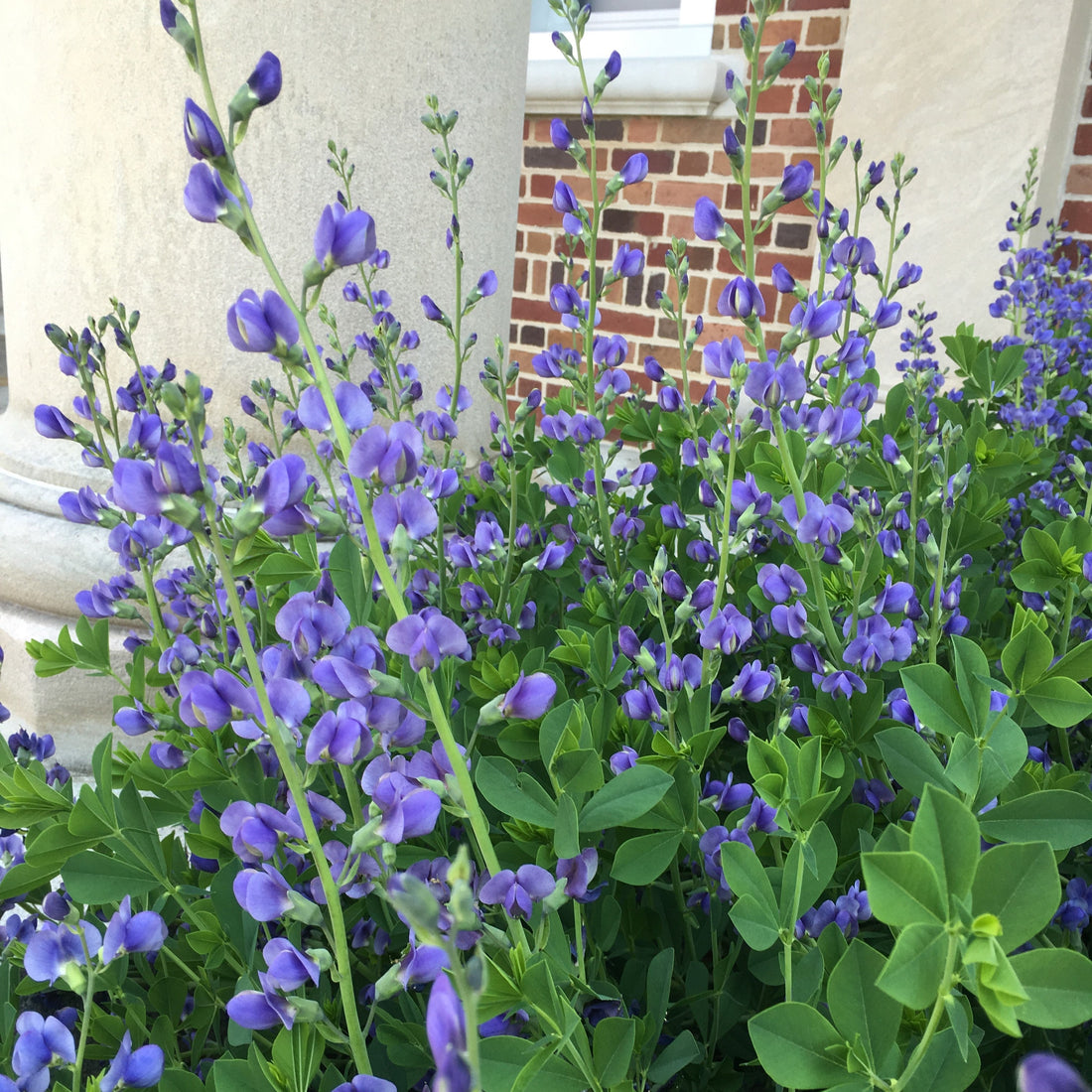
Baptisia australis
Plant it once. It outlives the fence.
Full sun for the most flowers and an upright shape. It takes part shade but may flop open.
Water weekly the first summer. After that the taproot handles drought.
Plant in spring or fall in average, well-drained soil. Dig a deep hole; it won't want to move later.
None. It's a legume and makes its own nitrogen.
Leave the pods for winter interest or cut them for arrangements. If it splays after bloom, trim it back by a third. Cut stems to the ground in late winter.
Asparagus-like shoots in spring. Blooms May into June. Blue-green leaves all summer, black pods into winter.
Few pests. Slow growth the first two years is normal. All parts are toxic to pets and people if eaten.


Why we stock it: One of the longest-lived perennials you can plant, and it gets better every year.
Grows wild in 8 states (USDA PLANTS records). About 19 native butterfly and moth species use Baptisia as a host (Narango et al. 2020).
That's everything we know about growing it. Thanks for reading.
Know someone with the right spot? Send them this.
 Blue False Indigofrom $21.99 · Arrives alive, or we replace it
What to plant this week in your zone, every Sunday. New ways to plant and odd tricks that actually work.
Sunday's tip is written for your zone: what to plant this week, and a kit that fits.Set your zone and Sunday's tip gets specific: what to plant this week, and a kit that fits.
 Patio pot kit
Balcony Brag
Forty square feet, big opinions.
4 plants · $165.92In a pot, any zone
See the kit →
 Office kit
The Desk Set
Three small plants, one desk.
3 plants · $45Indoors, any zone
See the kit →
 Shade garden kit
Shade Layers
For the spot the sun forgot.
8 plants · $151.92Zones 3–9
See the kit →
 Edible kit · plant this fall
The Snack Garden
Pick it, eat it, walk away.
4 plants · $199.80Zones 5–10
See the kit →
All plant kits →
