Light
Full sun to light part shade.
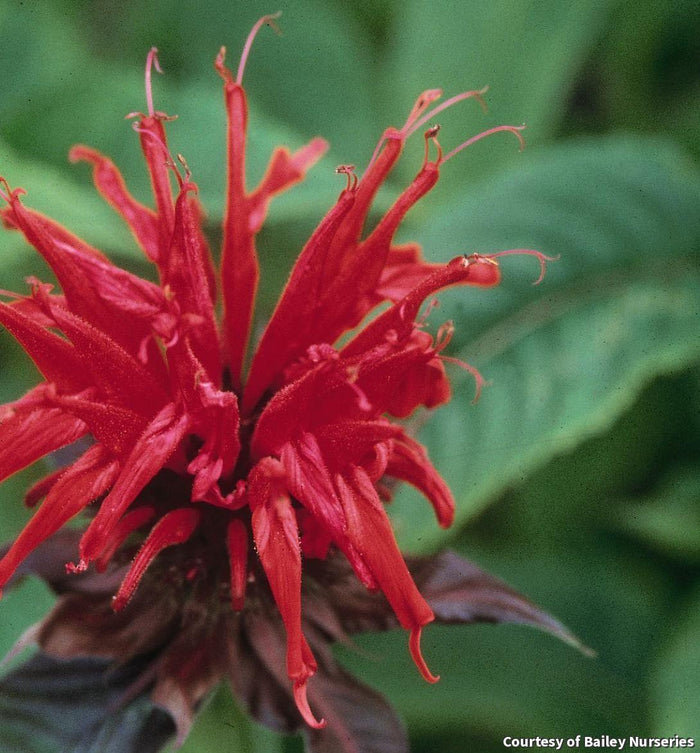
Monarda didyma
Hummingbird bait in fire-engine red.

Full sun to light part shade.
Keep it evenly moist; drought stress invites mildew.
Plant in spring or early fall at soil level.
Compost in spring.
Deadhead for more flowers. Cut down after frost or in spring.
Up in spring, flowers July to August.
Powdery mildew in dry, crowded spots, though it resists better than most. It spreads by runners; divide every 2–3 years.


Why we stock it: Big native red flowers with better mildew resistance than most red bee balms.
Grows wild in 10 states (USDA PLANTS records). About 10 native butterfly and moth species use Monarda as a host (Narango et al. 2020). 3 eastern pollen-specialist bee species use Monarda (Fowler & Droege 2020). Hummingbirds work the flowers.
That's everything we know about growing it. Thanks for reading.
Know someone with the right spot? Send them this.
 Bee Balm 'Jacob Cline'from $30.99 · Arrives alive, or we replace it
What to plant this week in your zone, every Sunday. New ways to plant and odd tricks that actually work.
Sunday's tip is written for your zone: what to plant this week, and a kit that fits.Set your zone and Sunday's tip gets specific: what to plant this week, and a kit that fits.
 Patio pot kit
Balcony Brag
Forty square feet, big opinions.
4 plants · $165.92In a pot, any zone
See the kit →
 Deer-resistant border kit
Deer Can't Even
Everything in it tastes terrible to deer.
12 plants · $392.88Zones 5–8
See the kit →
 Office kit
The Desk Set
Three small plants, one desk.
3 plants · $45Indoors, any zone
See the kit →
 Drought garden kit
The Hot, Dry Bank
For the slope the hose doesn't reach.
14 plants · $554.86Zones 5–9
See the kit →
 Pollinator garden kit
The Pollinator Buffet
Open seating for bees, butterflies and hummingbirds.
14 plants · $424.86Zones 4–9
See the kit →
 Shade garden kit
Shade Layers
For the spot the sun forgot.
8 plants · $151.92Zones 3–9
See the kit →
 Edible kit · plant this fall
The Snack Garden
Pick it, eat it, walk away.
4 plants · $199.80Zones 5–10
See the kit →
All plant kits →